



2026 GMC Sierra 2500HD vs. 2026 Ford F-250 Super Duty
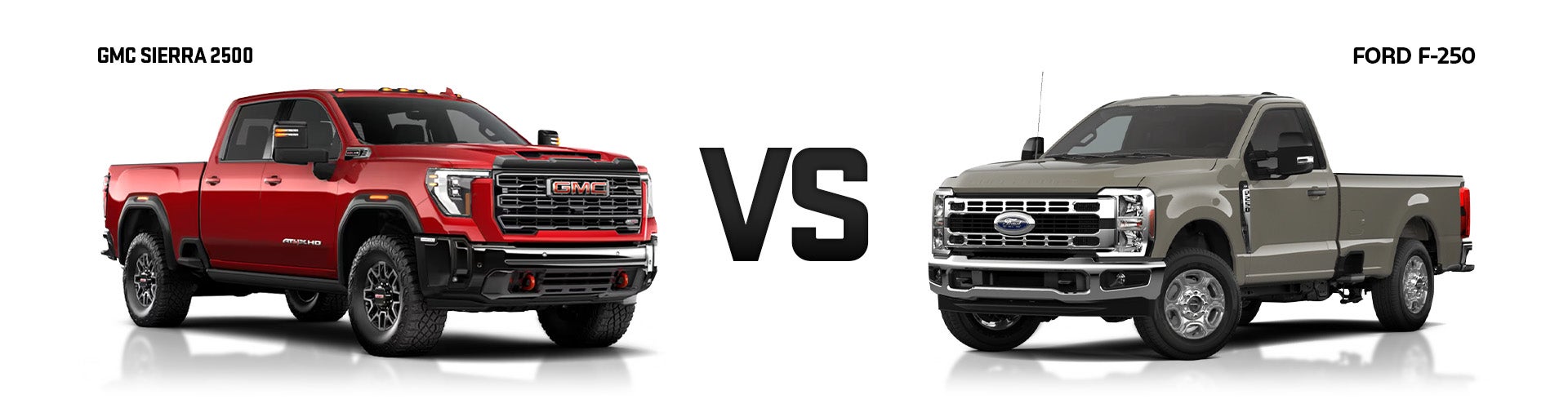
If you're shopping for a heavy-duty truck in Central PA, the GMC Sierra 2500HD and Ford F-250 Super Duty are probably both on your list. At Blaise Alexander GMC, we know both are serious work trucks with strong towing capability, available diesel power, and the kind of size and durability that make sense for farms, job sites, and long highway miles. The difference is in how they live day to day.
Who should choose the Sierra 2500HD?
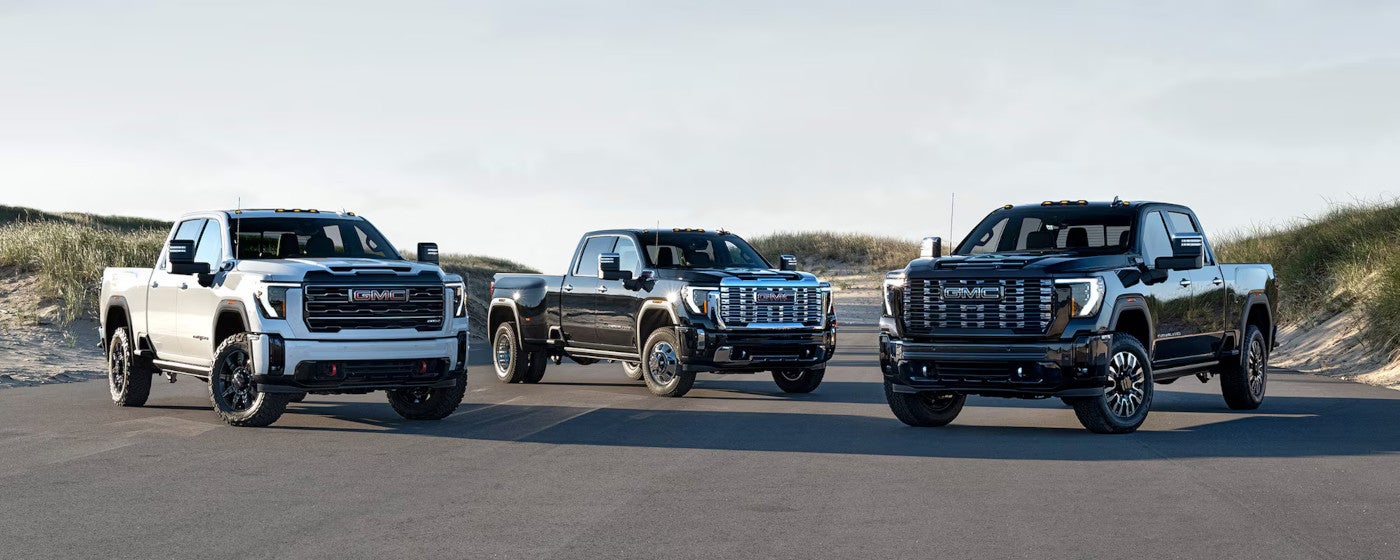
For many buyers around Selinsgrove, Lewisburg, Sunbury, and the Susquehanna Valley, the Sierra 2500HD is the better all-around fit. It gives you the heavy-duty strength you need, but it also tends to be easier to live with when you're driving rough county roads, dealing with winter corrosion, or using your truck for both work and everyday travel.
Ride quality and everyday driving
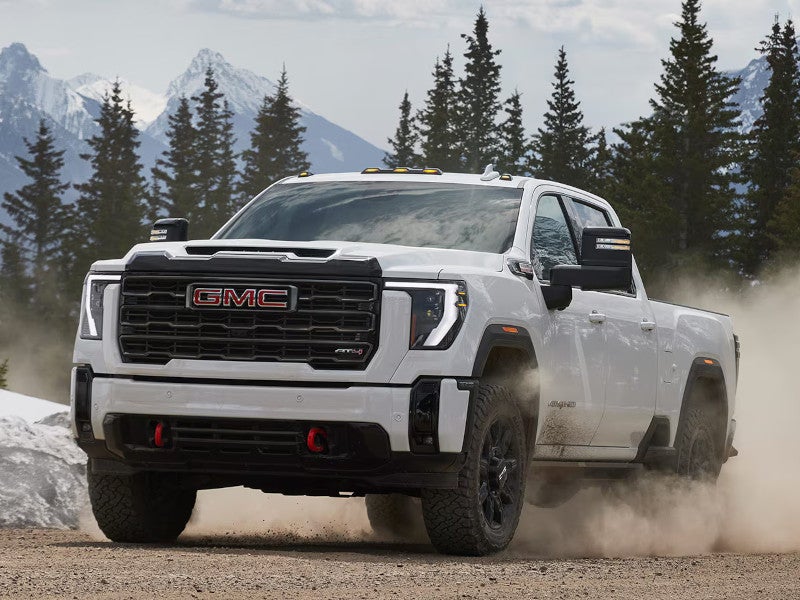
One of the biggest reasons many buyers prefer the Sierra 2500HD is how it rides. GMC uses independent front suspension, while the F-250 uses a solid front axle. That matters when your truck spends real time on frost-heaved backroads, patched pavement, muddy access lanes, and mountain grades instead of just a smooth interstate.
For drivers who spend long days on Route 322, haul through the Seven Mountains, or put on serious mileage between job sites, the Sierra generally feels more composed and less punishing. The Ford is absolutely capable, but the GMC tends to be the truck people would rather drive every day when the road surface is less than perfect.
Towing and capability: where the Ford has the headline number
To be fair, the Ford F-250 does win the max-towing argument. Properly equipped, it can reach higher conventional and gooseneck towing numbers than the Sierra 2500HD. If you're chasing the highest possible rating on paper, Ford has the advantage.
But that doesn't automatically make it the better truck for every buyer. Most owners in this market are towing equipment trailers, skid steers, compact tractors, horse trailers, campers, or enclosed trailers in the roughly 8,000- to 15,000-pound range. At those weights, both trucks are well within their comfort zone. The Sierra's available Duramax diesel still gives you serious torque, strong trailering confidence, and proven heavy-duty performance without feeling like you're giving something up.
If your work truly depends on squeezing out every last pound of available towing capacity, the F-250 deserves a close look. If you want a truck that tows confidently while also being easier to live with the rest of the time, the Sierra makes a very strong case.


Bed utility, tailgate function, and long-term durability
This is an area where GMC has some genuinely useful advantages. The Sierra HD offers the available MultiPro tailgate, which can work as a step, a load stop, and a more useful access point into the bed. It is one of those features that can sound like a gimmick until you actually use it on a work truck. For loading tools, climbing into the bed, or managing awkward cargo, it is practical in ways a standard tailgate just is not.
The Sierra HD also offers more heavy-duty cargo box volume than key competitors in its class, which matters if your truck regularly carries bulky equipment, feed, supplies, or jobsite gear. Ford counters with its aluminum bed and cab construction, which can help with corrosion resistance and weight management, so this is not a one-sided category. Still, GMC's bed access and tailgate design are features many owners notice and use constantly.
Diesel power and truck character
The available 6.6L Duramax in the Sierra 2500HD makes 470 horsepower and 975 lb-ft of torque, while Ford's available 6.7L Power Stroke comes in slightly stronger at 475 horsepower and 1,050 lb-ft of torque. On paper, Ford wins again. In practice, both engines are more than strong enough for the kind of work most buyers ask of a 2500-series truck.
The difference for many buyers comes down to preference, familiarity, and how the truck feels as a complete package. The Sierra's power delivery, transmission tuning, and smoother front suspension help it feel more settled in everyday use. The Ford feels especially appealing to buyers who prioritize absolute diesel output and towing leadership.

Interior comfort and daily livability
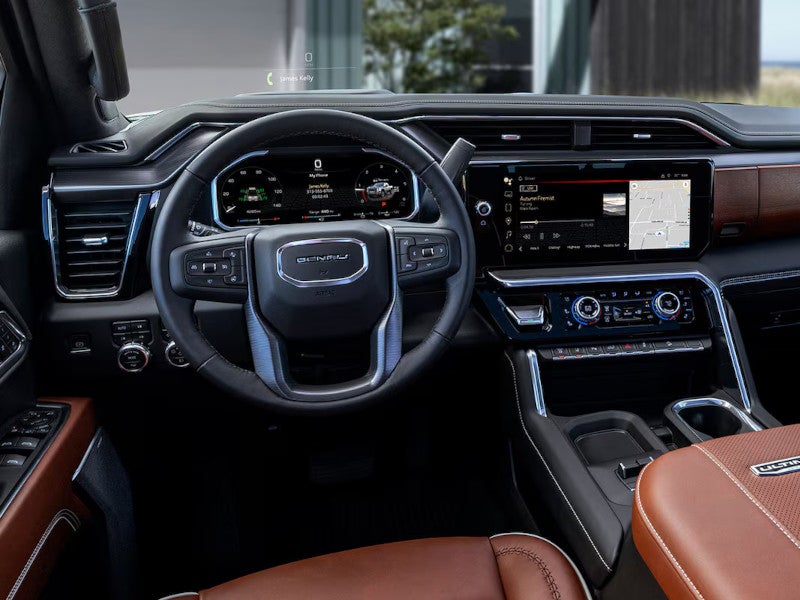
Heavy-duty truck buyers are not just buying a tow rig anymore. For a lot of owners, this truck is also the daily driver, the highway vehicle, and the truck that shows up to customer sites. That is another reason the Sierra 2500HD stands out. Its cabin feels refined, well laid out, and easier to spend long hours in, especially in upper trims like the AT4, Denali, and Denali Ultimate.
The F-250 can absolutely be outfitted nicely, especially in higher trims, but the Sierra tends to better balance work-truck toughness with comfort and presentation. If you want a truck that can pull hard during the week and still feel polished on the way to dinner or a meeting, GMC has an edge.
Who should choose the Ford F-250?
The F-250 may be the better choice if your priority list starts with maximum available towing, maximum diesel torque, or a specific Ford configuration such as Tremor for heavier off-road use. It is a very capable truck, and for some buyers the spec-sheet advantage is enough to decide it.
That said, a lot of local shoppers find that once they compare both trucks in person and think about how they will actually use them most of the year, the Sierra 2500HD feels like the smarter long-term fit. That is something our team at Blaise Alexander GMC hears often from drivers who need real heavy-duty capability without sacrificing everyday comfort.
Test-drive the GMC Sierra 2500HD in Selinsgrove, PA
If you're comparing the GMC Sierra 2500HD and Ford F-250, the best next step is to see the Sierra for yourself. A quick walkaround and test drive can tell you a lot about ride quality, cabin comfort, visibility, and bed usability that a spec sheet never will.
Visit Blaise Alexander GMC in Selinsgrove to explore current Sierra 2500HD inventory and find the trim, cab, and engine setup that fits the way you work and drive in Central PA.